AI vision inspection that adapts to your line
Detect cap, fill-level, label, and bottle defects without fighting brittle thresholds.
Built for bottling teams that need line-ready inspection, faster exception review, and traceability that still holds up when lighting, speed, and SKU variation change.
Closure drift detected
Run 1842 · Station 02
The Problem
Inspection breaks down between manual review and brittle rules
Thresholds tuned for one SKU or lighting condition stop working when the line or product changes.
Manual review queues grow when operators can't trust automated pass/fail, so real defects slip through.
Brittle rules cause false rejects on good product, adding cost and slowing throughput.
Traceability is weak: hard to see which station, shift, or SKU drives most defects.
Integrating inspection with line control and MES is painful, so data stays siloed.
Keeping rules and calibrations in sync across multiple stations and SKUs is error-prone.
Inspection workflows built for real plant conditions
Designed for changing production conditions
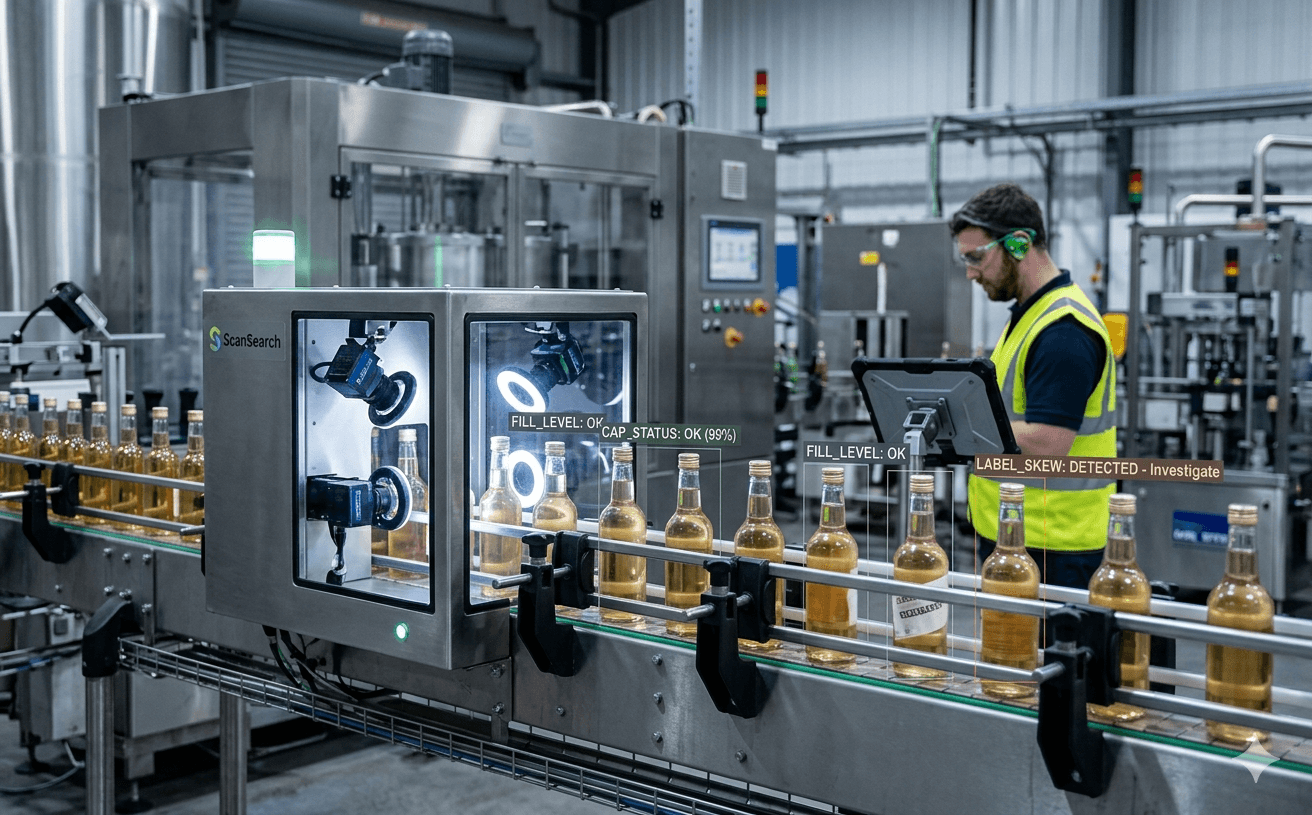
Qualens is built for the realities of the line, changing lighting, shifting speeds, SKU variation, and the review workflows teams still need when an event is not fully clear.
Built for operators, QA, and plant teams
Core Inspection Workflows
Common defect categories on the line
Cap & closure
Detect mis-seated caps, skewed closures, and seal defects across speeds and SKUs without constant re-tuning.
Why it matters: Closure defects drive recalls and consumer complaints; adaptive vision reduces false rejects while catching real issues.
Fill level
Monitor fill height and meniscus consistency under normal line variation and lighting changes.
Why it matters: Consistent fill-level inspection improves compliance and reduces give-away without manual sampling bottlenecks.
Label & print
Check label placement, print quality, and presence across different bottle shapes and label types.
Why it matters: Label and print defects affect brand and regulatory requirements; one workflow can cover multiple SKUs.
Bottle & glass
Spot cracks, stones, and cosmetic defects on bottles and containers in motion.
Why it matters: Container defects create safety and quality risk; early detection keeps bad product off the line.
Exploring AI inspection for your line?
Share your current defect categories, false reject behavior, and what still requires manual review.